
7 Custom Drone Tenders That Keep Agricultural Fleets Flying
Last Updated: November 17, 2026
Quick Summary
A custom drone tender is a mobile support system built around your specific spray drone fleet, combining water storage, chemical mixing, battery charging, and transport in one unit. The tender, not the drone, usually sets the ceiling on daily output, so cutting refill and battery-swap stops short adds acres to every working day.
- Three configurations cover most operators: truck-bed build, towable trailer, and DIY kit.
- The Roade JR truck-bed build starts at $10,500 and carries a 200-gallon tank.
- The Roade JR DIY Kit is $4,500 with the generator not included.
- Size the tank to your daily acreage, not your trailer, by running cycle-time math first.
- Keep the freshwater rinse tank out of the spray-solution total so cleanup never eats capacity.
Table of Contents
- Why a Custom Drone Tender Decides Your Acres Per Day
- Trailer, Truck-Bed, or DIY: Comparing Tender Configurations
- Portable Water Tanks for Agricultural Drone Spraying: What Size Fits Your Fleet
- Drone Spraying Water Tank Capacity: Matching Gallons to Acres Per Day
- Ready-to-Fly Drone Tender Kit vs. DIY Agricultural Drone Tender
- Specification Checklist and Total Cost of Ownership for a Custom Build
- Frequently Asked Questions
Why a Custom Drone Tender Decides Your Acres Per Day
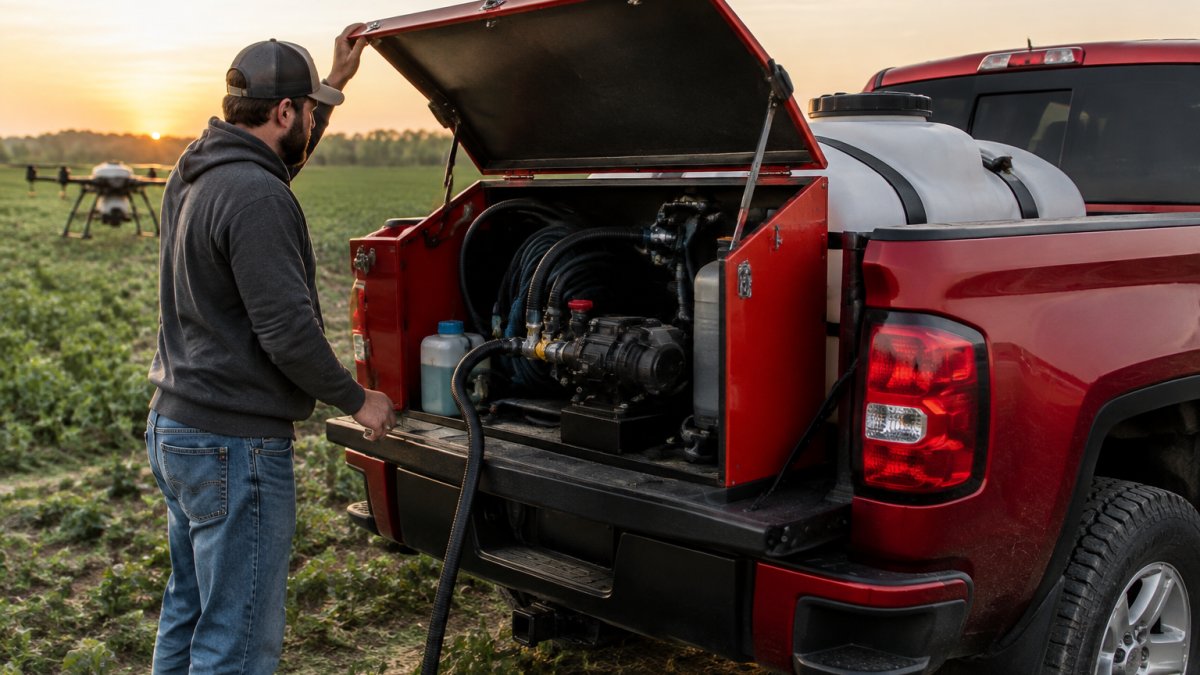
A custom drone tender is a mobile support system built around your specific spray drone fleet, combining water storage, chemical mixing, battery charging, and transport in one unit. The tender, not the drone, usually sets the ceiling on daily output. Every refill and battery swap pulls the aircraft out of the air. A tender that cuts those stops short adds acres to every working day.
Trailer, Truck-Bed, or DIY: Comparing Tender Configurations
Three configurations cover most commercial operators: a truck-bed build, a towable trailer, and a DIY kit. Each trades cost against mobility and setup time. Here is how they stack up.
| Configuration | Starting Price | Best For | Field Mobility |
|---|---|---|---|
| Roade JR truck-bed | $10,500 | Full-size pickup owners | High, no towing |
| Roade long-bed | $12,500 | 1-ton trucks, small to mid drones | High, extra length |
| Roade Tiny trailer | $10,500 | UTV, SUV, half-ton owners | Street legal, under 3,000 lb loaded |
| Roade JR DIY Kit | $4,500 | Operators with their own generator | Depends on your build |
Starting Price
You can browse the full range of custom spray drone tenders to compare configurations side by side.
Roade JR: Full-Size Pickup Truck-Bed Build
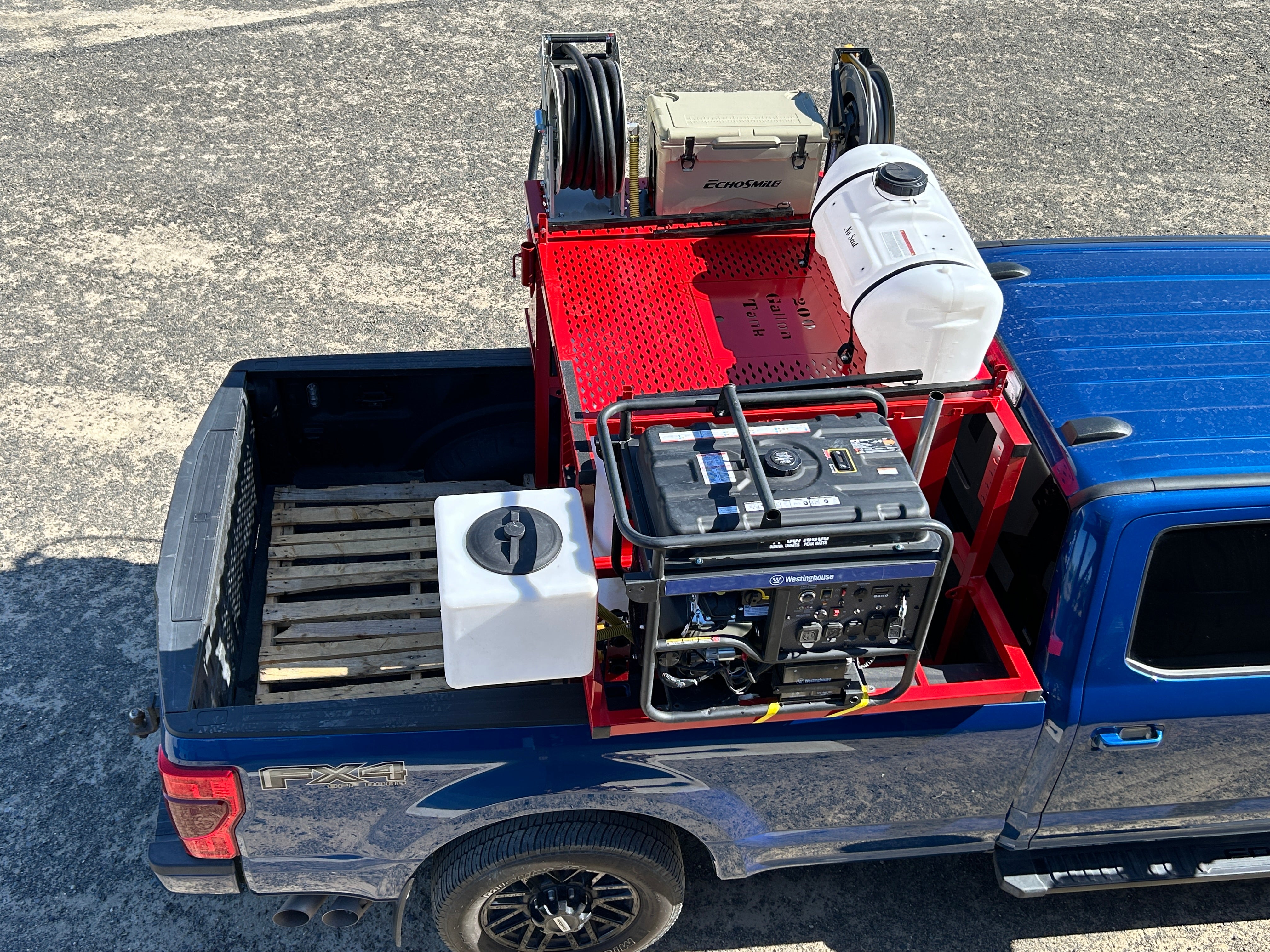
The Roade JR is our truck-bed unit for full-size pickups. It weighs 720 lb without a generator and carries a 200-gallon tank with a bottom sump, a 25-gallon freshwater rinse tank, and an optional 15-gallon cone tank. A 54 gpm stainless chemical pump and a 5.5 gpm freshwater pump handle mixing and cleanup. Generator controls and tank valves are easy to reach. See the full Roade JR specifications for the build details.
Roade: Long-Bed Unit for Small to Medium Drones
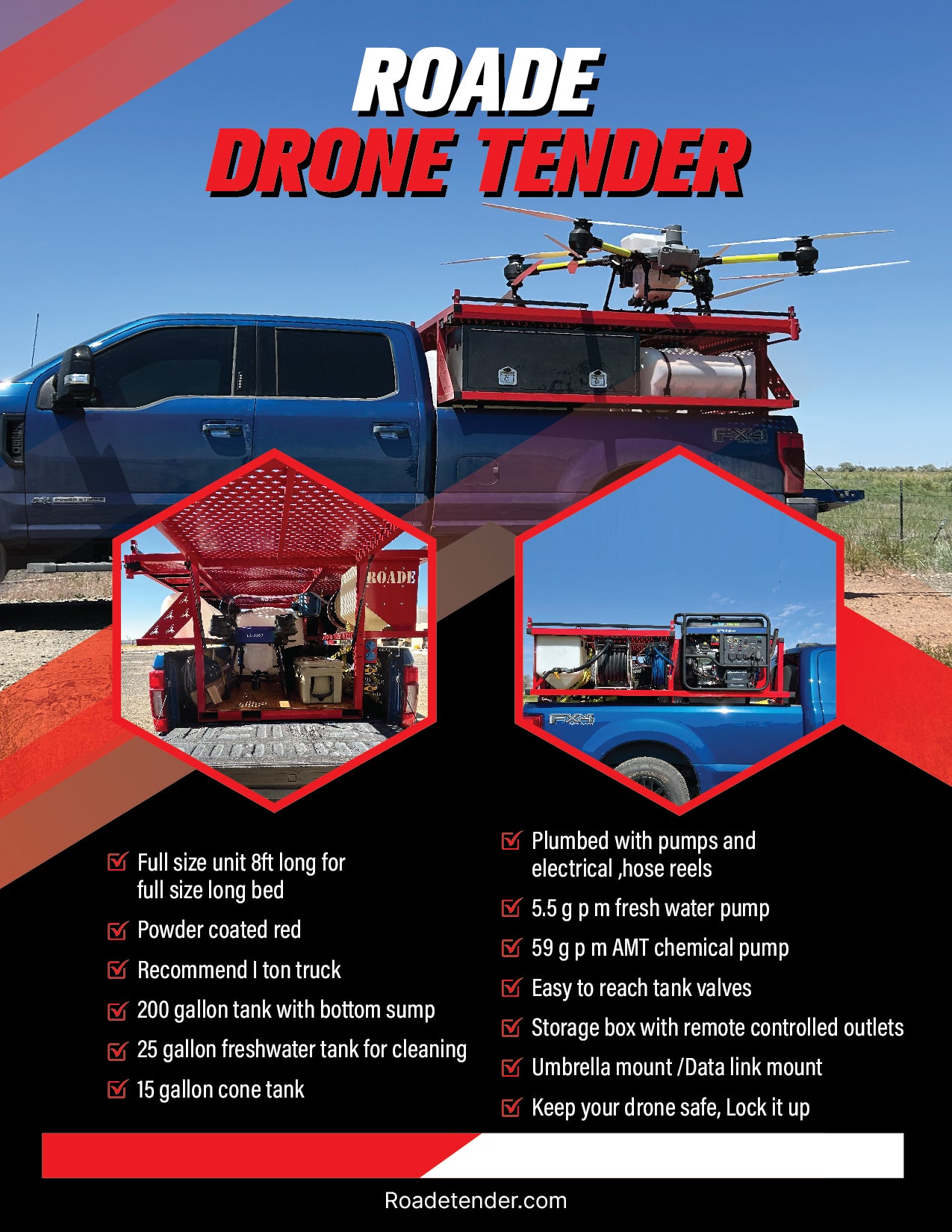
The Roade is an 8-foot unit built for full-size long beds, and we recommend a 1-ton truck. It adds a 59 gpm chemical pump and a storage cabinet that fits small to medium drones such as the XAG 150, T50, and J100. The T100 will not fit in the cabinet. The Roade long-bed unit page lists tank sizes and options.
Roade Tiny Trailer: Street-Legal Mobility for UTV and SUV Owners
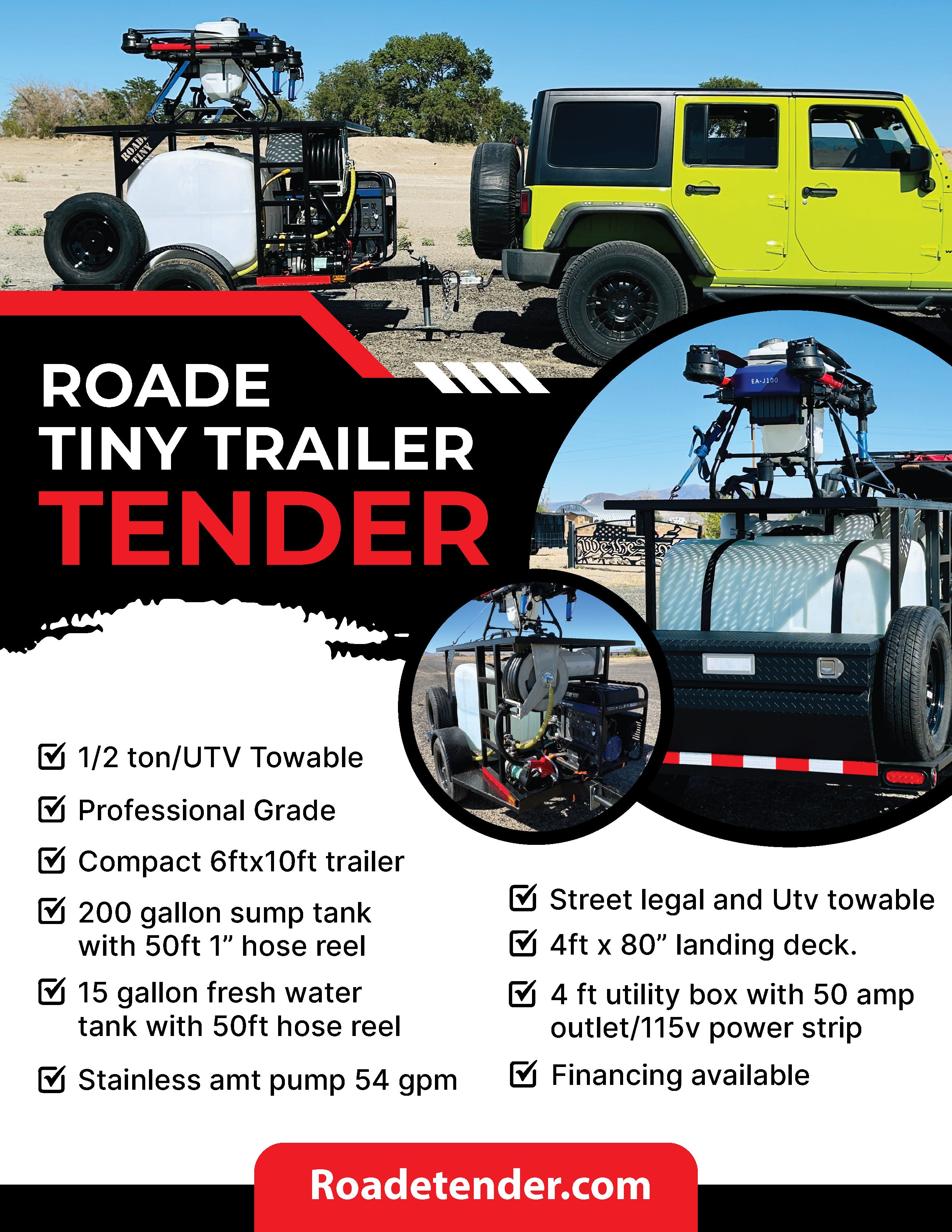
Operators with half-ton trucks, SUVs, or UTVs often cannot carry a bed build. The Roade Tiny is a 6-by-10-foot trailer, street legal and under 3,000 lb fully loaded. It holds a 200-gallon tank, a 15-gallon freshwater tank, a stainless pump, and a 4-by-8-foot landing deck, plus a 4-foot storage box wired with a 50-amp plug and 120V power strip. Check the Roade Tiny trailer for weight and capacity.
Portable Water Tanks for Agricultural Drone Spraying: What Size Fits Your Fleet
Portable water tanks for agricultural drone spraying determine how many refills you complete before returning to a water source. Most tender builds center on a 200-gallon tank, which matches the working tank of common spray drones several times over.
Drone Spraying Water Tank Capacity: Matching Gallons to Acres Per Day
Drone spraying water tank capacity should match your acres-per-day target, not your trailer size. The way to get there is to build a simple throughput model before you order a build.
Start with four inputs you can measure or estimate honestly:
- Application rate. How many gallons of mixed solution the drone puts down per acre at your label rate and spray volume. This comes from the product label and your chosen carrier volume, not from the tender.
- Working tank size. The usable spray tank on each aircraft, minus a practical reserve so you are not running the pump dry.
- Acres per tank. Working tank gallons divided by gallons per acre. A 10-gallon working tank at 2 gallons per acre treats about 5 acres per fill; at 1 gallon per acre it treats about 10.
- Cycle time. Flight time to empty the tank plus return-to-tender, refill, and swap time. This is where the tender earns or loses its keep.
Here is the mechanism in plain terms. If a drone treats 5 acres per tank and completes a full cycle in 12 minutes, that is 25 acres per hour per aircraft in a perfect world.
Now size the tank. Multiply your target acres per day by gallons per acre to get total solution volume, then divide by the number of refills you are willing to make.
Watch out: sizing the tank to your trailer instead of your daily acreage is the most common way operators end up with a rig that looks right in the shop and bottlenecks in the field.
A rinse reserve belongs in the model as a separate line.
Ready-to-Fly Drone Tender Kit vs. DIY Agricultural Drone Tender
A ready-to-fly drone tender kit arrives plumbed, wired, and mounted, while a DIY agricultural drone tender leaves assembly and generator selection to you. The Roade JR DIY Kit includes a powder-coated frame, a 200-gallon sump tank, and a 25-gallon rinse tank for $4,500, with the generator not included. The ready-to-fly Roade JR runs $10,500 and adds pumps, hose reels, electrical, and controls. The DIY route can save money if you have the shop time and a generator on hand. Compare the DIY kit option against the full build before you decide.
Specification Checklist and Total Cost of Ownership for a Custom Build
Before commissioning a custom build, confirm these specifications in writing with your builder:
- Tank size and sump configuration matched to fleet size and daily acreage
- Chemical pump flow rate suited to your mix volume and refill cycle
- Freshwater rinse capacity separate from spray solution
- Generator output sized to your battery charging load and charge rate
- Storage for drones, batteries, and sprayer equipment, with the largest aircraft measured against the cabinet
- Trailer weight, hitch class, and tongue weight within your tow vehicle rating
- Hose reel length and chemical hose material compatible with your products
- Spill containment and secondary containment for chemical and rinse water
- Electrical: GFCI protection, properly rated plugs, and weatherproof enclosures
- Parts availability and service access during the season
Total cost of ownership stretches beyond the purchase price, and the honest way to compare a $4,500 DIY kit against a $10,500 ready-to-fly build is to add up the recurring lines over a season.
The payback logic is throughput, not features. If a tender shortens each refill and recharge stop by a few minutes, multiply that saving by the number of cycles per day and the number of working days in the season.
Safety and regulatory items belong in the build brief, not in a folder after delivery. Chemical handling, spill containment, and transport of agricultural products fall under requirements that vary by state and by product label. Confirm applicable requirements with your state lead agency and your product labels.
The tender you choose sets how many hours your fleet spends spraying instead of waiting.
Frequently Asked Questions
How much water capacity does an agricultural drone tender need?
Capacity depends on how many refills your spray drone needs per day. A 200-gallon tank is the standard starting point on Roade Tender units, and it covers most single-drone operations without a mid-day water run. Running two or more applicator drones or high application rates means planning for more refills, a larger fresh water reserve, or a tender that can be refilled on site. Match tank size to acres per day and spray solution volume, not to the trailer's footprint.
Can one custom drone tender support multiple agricultural spray drones?
Whether a tender suits two drones depends on how it is laid out. Tank size, chemical pump flow, and generator capacity all affect how many aircraft one unit can support. The limit is usually power and mixing throughput, not tank size. Plan the equipment layout around the number of applicator drones you run, and leave storage for spare batteries so one drone flies while the other charges.
Is a DIY agricultural drone tender meaningfully cheaper than a ready-to-fly kit?
The Roade JR DIY Kit starts at $4,500 and includes the powder-coated frame, a 200-gallon sump tank and a 25-gallon rinse tank, with no generator. A complete Roade JR ready-to-fly unit is $10,500. The gap covers pumps, hose reels, electrical, plumbing and generator controls. A DIY build saves money up front but adds assembly time, and you source the pumps, wiring and generator yourself, so budget for both parts and labor before committing.
What should a custom drone tender quote include?
Ask for the tank sizes, pump flow rates, generator output, hose reel lengths, storage box capacity and drone tie-downs in writing. Confirm which drone models the cabinet fits, since larger airframes may not clear a standard cabinet. Include delivery, any financing terms, and the lead time for replacement parts. A quote that lists only the base unit price leaves out the components that decide whether the tender actually keeps your fleet flying.
How do operators keep spray drones supplied with water and chemicals in the field?
A tender can act as a mobile service point: it carries spray solution and pumps it toward the drone. An upgraded EPDM chemical hose with a fill-through port nozzle is available as an option. Fresh water on a separate tank and reel handles rinsing between loads. A generator and remote-controlled outlets recharge batteries while the next load is mixed. That loop, refill, recharge, refuel, is what cuts the downtime between flights and raises acres per day.
