
How to Boost Drone Spraying Tender Daily Acreage Gains
Last Updated: November 12, 2026
Quick Summary
To boost drone spraying tender daily acreage gains, cut the turnaround time between flights so the aircraft spends more minutes spraying and fewer on the ground. A tender with a high-flow chemical pump, reachable hose reels, and a freshwater rinse tank lets one person refill, remix, and relaunch quickly. Run the daily-acreage formula with honest refill times before you bid.
- Daily acres = (productive hours × 60 ÷ cycle minutes) × acres per cycle.
- Cycle minutes equal flight time plus turnaround time, so refill speed sets the ceiling.
- Heavy-lift drones reach 120-200 acres per day only if the tender keeps them fed.
- The Roade JR carries a 200-gallon sump tank, 25-gallon rinse tank, and 54 gpm pump.
- Skipping a freshwater rinse tank risks cross-contamination that can damage a crop.
Table of Contents
- Why Tender Workflow Decides Your Daily Acreage
- Daily Acreage by Drone Type: Comparison Table
- The Factors That Cap Acres per Hour
- Spray Drone Refill Station Setup That Keeps Up
- How Ag Drone Spraying Efficiency Translates to Treated Acres
- Drone Spraying Cost per Acre and What It Means for Bids
- Choosing a Tender Setup for Your Fleet
- Frequently Asked Questions
Why Tender Workflow Decides Your Daily Acreage
The drone gets the credit. The tender decides the outcome. That is the core truth behind every conversation about drone spraying tender daily acreage gains, and it is the part most operators learn the hard way. Ground support equipment sits between flights, and that is where days quietly disappear.
A spray drone can only spray while it is airborne. Every minute it sits on the ground waiting for a refill or a fresh battery is a minute of lost coverage. The aircraft is rarely the limit. The refill process usually is.
Below, we break down the real math behind acres per day, show how tender setup changes the numbers, and give you a calculator you can run on your own operation.
The Refill-and-Battery Bottleneck in Plain Numbers
Picture a typical field cycle. The drone lands, you swap batteries, refill the tank, and send it back up. If that turnaround takes several minutes and the flight itself is short, the ground time eats a large share of the clock.
- Landing and approach: seconds, but the drone must be empty and positioned
- Battery swap: one or two packs, depending on the aircraft
- Tank refill: limited by pump flow and hose reach
- Mixing and agitation: often the slowest step when done by hand
The fix is not a faster drone. It is a tender that lets one person refill, remix, and relaunch without moving the aircraft far or hunting for water.
A Transparent Daily-Acreage Calculator
Here is the formula we use. It is deliberately simple, and you can run it before you buy anything.
Daily acres = (productive hours × 60 ÷ cycle minutes) × acres per cycle
Where:
- Cycle minutes = flight time + turnaround time
- Acres per cycle = tank volume ÷ application rate
- Productive hours = operating window minus travel, setup, and weather delays
Run it with honest inputs. A common mistake is plugging in ideal flight time and ignoring the refill. That single error inflates projected daily acreage, and it is the reason bids go sideways.
Daily Acreage by Drone Type: Comparison Table
Different aircraft carry different payloads, so daily acreage shifts with tank size and flight time. The table below shows typical capacity ranges by drone class, using commonly cited manufacturer specifications for popular agricultural models. Treat these as planning bands, not promises. Your application rate, terrain, and tender setup will move the real number.
| Drone class | Example models | Typical tank size | Flight time per charge | Acres per cycle at 2 gal/acre | Realistic acres per day (8-hr window) |
|---|---|---|---|---|---|
| Compact | T50, J100 class | 10-12 gallons | 10-15 minutes | 5-6 acres | 40-70 acres |
| Mid-size | P150 Pro class | 15-20 gallons | 12-18 minutes | 7-10 acres | 70-120 acres |
| Heavy-lift | T100 class | 25-40 gallons | 15-25 minutes | 12-20 acres | 120-200 acres |
Realistic acres per day (8-hr window)
The heavy-lift class wins on paper. It only wins in the field if your tender can keep it fed. A big tank on a slow refill station is a parked drone. The table assumes a 2 gallon-per-acre application rate, which is common for many row-crop and specialty applications; higher volumes shrink acres per cycle proportionally. Flight time per charge depends on payload, wind, and temperature, so use the lower end of the range when planning bids.
Compact drones on small, irregular fields tend toward the low end of the daily range because turns and setup dominate. Heavy-lift drones on large rectangular fields can approach the high end when paired with a fast tender.
FAA Part 137 agricultural aircraft operator guidance
The Factors That Cap Acres per Hour
Acres per hour is a headline number. It is also the most misunderstood one. Four variables set the ceiling, and each one interacts with the others.
- Tank capacity and payload. Bigger tanks mean fewer refills per acre.
- Application rate. Higher spray volume per acre drains the tank faster.
- Flight speed and swath width. Wider passes and steady speed cover more ground per minute.
- Turnaround time. The hidden tax on every cycle.
Tank Capacity, Spray Volume, and Refill Frequency
Refill frequency is a simple division problem. If your tank holds a set volume and your application rate is fixed, the number of refills per field is predictable. Fewer refills means more air time. That is the whole equation.
The practical lever is the refill itself. A tender with a high-flow chemical pump and a reachable hose reel cuts each fill to a fraction of a hand-pump job. That is where ag drone spraying efficiency actually comes from.
Field Size, Shape, Terrain, and Weather
A square, flat field flies clean. A long, narrow field forces more turns and more wasted passes. Rolling terrain changes your altitude and your spray pattern. Wind pushes you to slower speeds and wider buffers.
- Small, odd-shaped fields: more turns, lower effective acres per hour
- Large, rectangular fields: cleaner passes, higher output
- Hilly ground: slower speeds, more battery drain
- Windy days: reduced windows, more downtime
Build weather slack into your daily plan. Wind and heat shrink the productive window more often than operators expect.
Spray Drone Refill Station Setup That Keeps Up
A refill station is only as good as its weakest link. The goal is a single stop where the drone lands, refills, swaps power, and relaunches without the operator walking away.
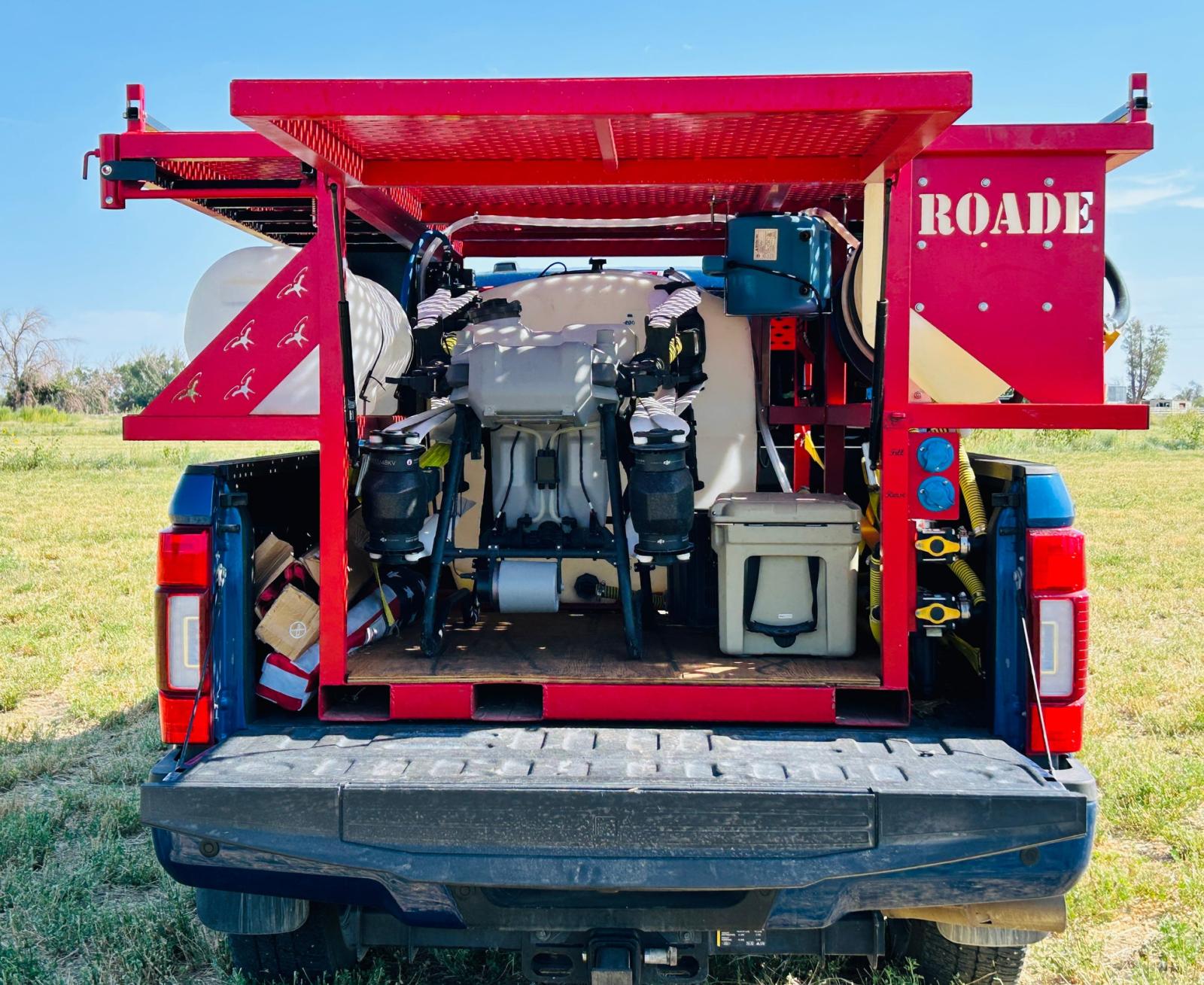
What a fast station needs:
- A large main tank with a bottom sump so you draw the full volume
- A dedicated freshwater tank for rinsing between products
- A high-flow chemical pump for fast fills
- Hose reels within easy reach of the landing deck
- A landing platform at working height
- Storage for batteries and tools with power outlets
Our Roade JR includes a 200-gallon tank with a bottom sump, a 25-gallon freshwater tank for cleaning, a 54 gpm stainless chemical pump, and a 48-inch upper platform. It is made for a full-size pickup truck and weighs 720 lbs without a generator. If you want to see how the full tender lineup fits different operations, browse the spray drone tenders.
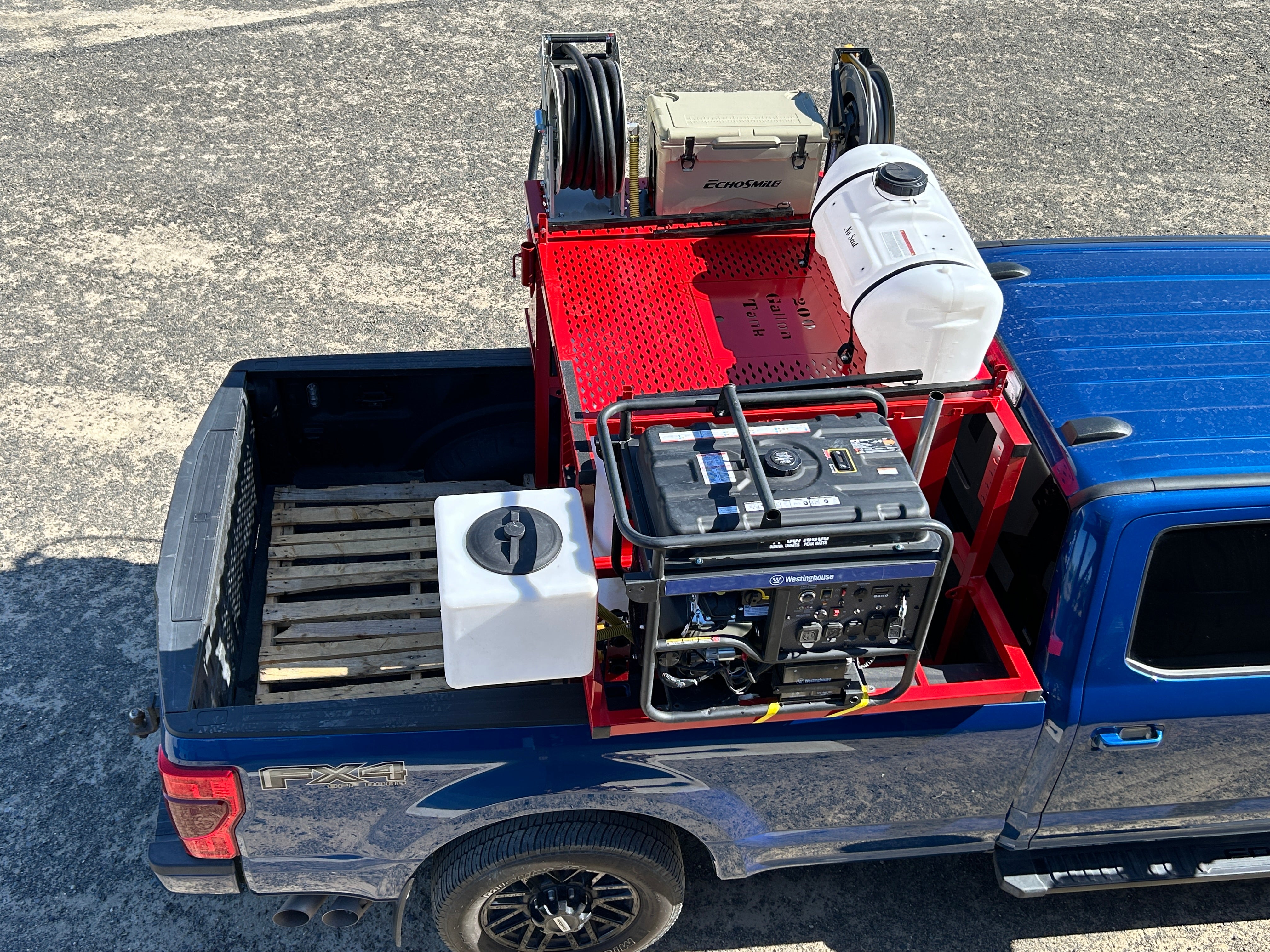
Skipping a freshwater rinse tank risks cross-contamination between products, which can damage a crop.
How Ag Drone Spraying Efficiency Translates to Treated Acres
Efficiency is not a feeling. It is treated acres per productive hour. Two operators with identical drones can post very different daily totals because one has a tender and one has a pickup bed full of jugs.
The gains stack:
- Faster refills mean more cycles per hour
- More cycles mean more acres treated
- More acres treated per day means more jobs per season
Custom application work rewards this directly. When you can promise a realistic daily acreage and hit it, you win repeat contracts. When you overpromise and stall in the field, you do not.
USDA Agricultural Research Service spray application research
Drone Spraying Cost per Acre and What It Means for Bids
Drone spraying cost per acre is not just chemical and flight time. It is the cost of every minute the drone sits idle. Ground time is paid time. If your tender cuts turnaround, your cost per acre drops without touching your price.
Here is how we think about a bid:
- Estimate cycle minutes honestly, including refill
- Multiply by cycles needed for the field
- Add travel, setup, and teardown
- Divide total cost by treated acres
A tender that saves turnaround minutes on every cycle compounds across a season. That is the real return, and it shows up in your margin, not just your schedule.
Choosing a Tender Setup for Your Fleet
Match the tender to the truck, the drone, and the terrain. That is the whole decision.
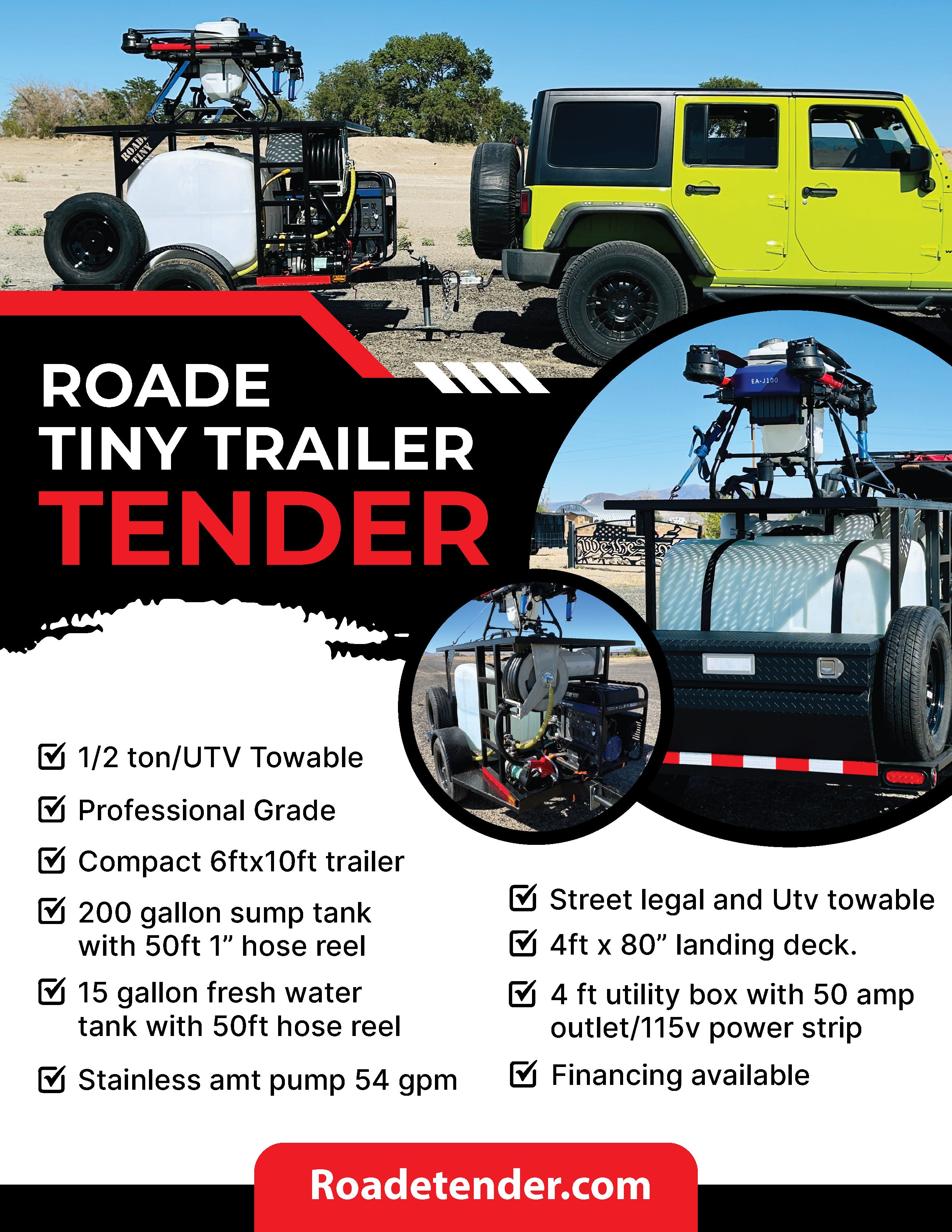
For full-size pickups, the Roade JR and the larger Roade unit are available options. The Roade Tiny trailer is built for hard-to-reach UTV jobs and half-ton trucks or SUVs, weighs under 3,000 lbs fully loaded, and is street legal at 6 feet wide by 10 feet long. If you want to build your own station, the Roade JR DIY kit includes a powder-coated frame, a 200-gallon sump tank, and a 25-gallon rinse tank. The generator is not included.
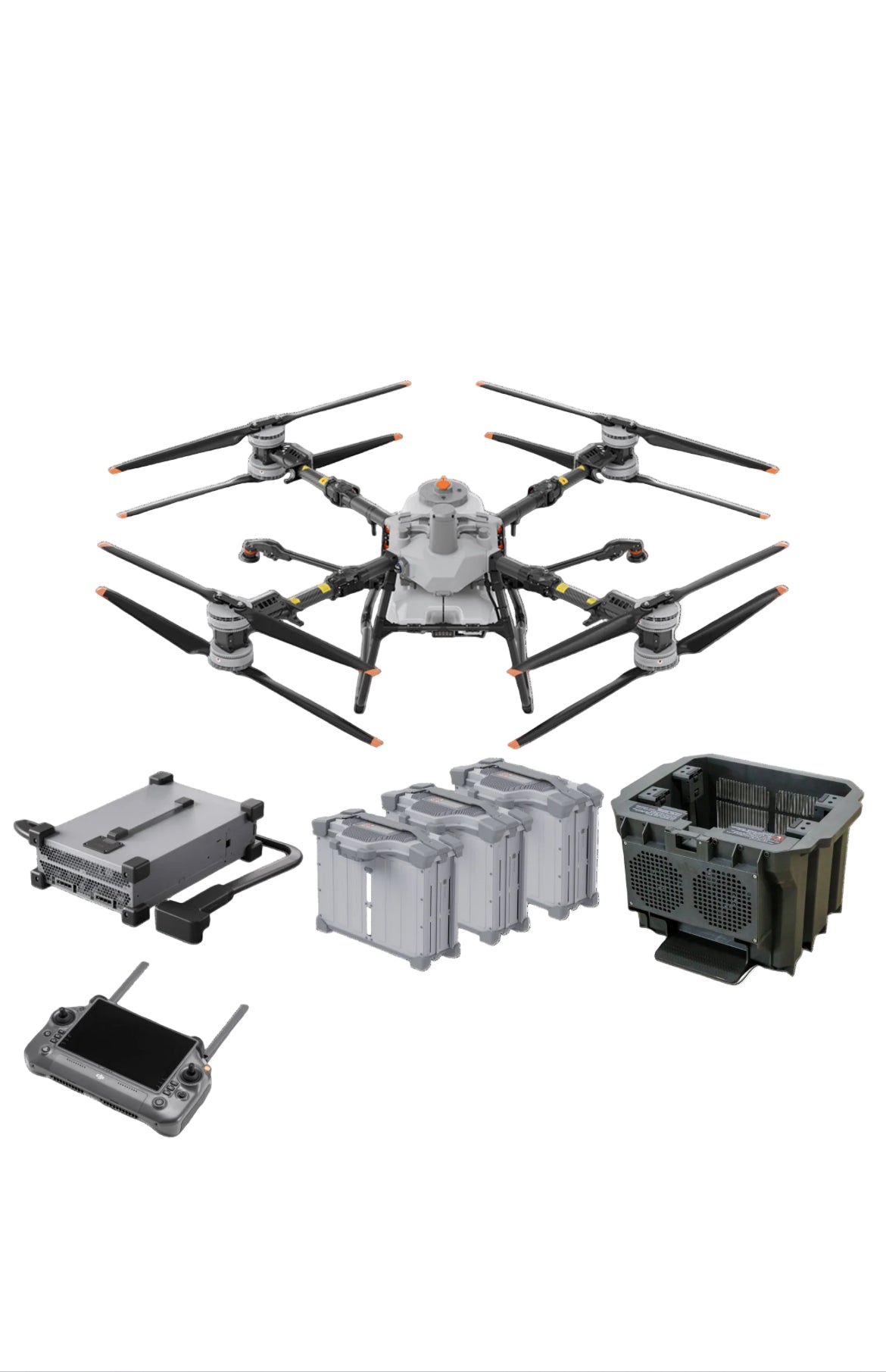
If you are running a mixed fleet and need help sizing the right setup, contact our team with your drone models and daily acreage target.
The gap between a good day and a great day in the field is almost never the aircraft. It is the ground support behind it. Roade Tender builds custom spray drone tenders with large sump tanks, high-flow chemical pumps, freshwater rinse tanks, and reachable hose reels, all sized to your fleet. Get started with Roade Tender and turn your refill stops into minutes instead of delays.
Frequently Asked Questions
How many acres can a drone spray in a day with a tender?
It depends on tank size, battery count, and how fast your tender can refill. Daily acreage depends on tank size, battery count, and refill speed. The limiting factor is rarely flight speed; it is refill and battery-swap turnaround, which is why tender layout decides the number.
What is the 1:1 rule for drone spraying and why does it matter?
The 1:1 rule says each drone needs one dedicated tender and crew to keep flying without waiting. Two drones sharing one tender usually means one sits idle during refills. Following the rule protects ag drone spraying efficiency because the drone stays in the air while the tender handles mixing, refilling, and battery swaps. Operators running three or four drones should plan tender capacity and crew size around that ratio, not around the drone count alone.
How much time does a mobile tender save per day?
Manual refills and battery changes done without a tender often take 8 to 12 minutes per cycle. A well-organized spray drone refill station setup with pre-mixed chemical, a fast pump, and charged batteries can cut that to 3 to 5 minutes. Across 20 to 30 cycles in a day, that is several hours of flight time recovered, which directly raises acres treated and lowers drone spraying cost per acre.
What equipment does a high-volume drone spraying operation need?
At minimum: a tender with a chemical tank, fresh water tank for cleaning, chemical pump, hose reels, and a landing deck. Add a generator or power supply for battery charging, a mixing station, and storage for spare parts. Crew size of two per drone keeps the workflow moving. Roade Tender builds ready-to-fly and DIY options for DJI, EA Vision, and XAG systems.
